
As of January 2013, more than 350 scientists and engineers from more than 60 institutions participate in the LBNE Science Collaboration, led by cospokespersons Bob Wilson (CSU) and Milind Diwan (BNL). The collaborators come from universities and national laboratories, including collaborators from the United States, India, Italy, Japan, and the UK.
The proposed Long-Baseline Neutrino Experiment would greatly advance research at the Intensity Frontier. It is one of the top priorities identified by the P5 panel.
The LBNE Science Collaboration is advancing plans for a massive neutrino detector to find out whether neutrino interactions violate the matter-antimatter symmetry.
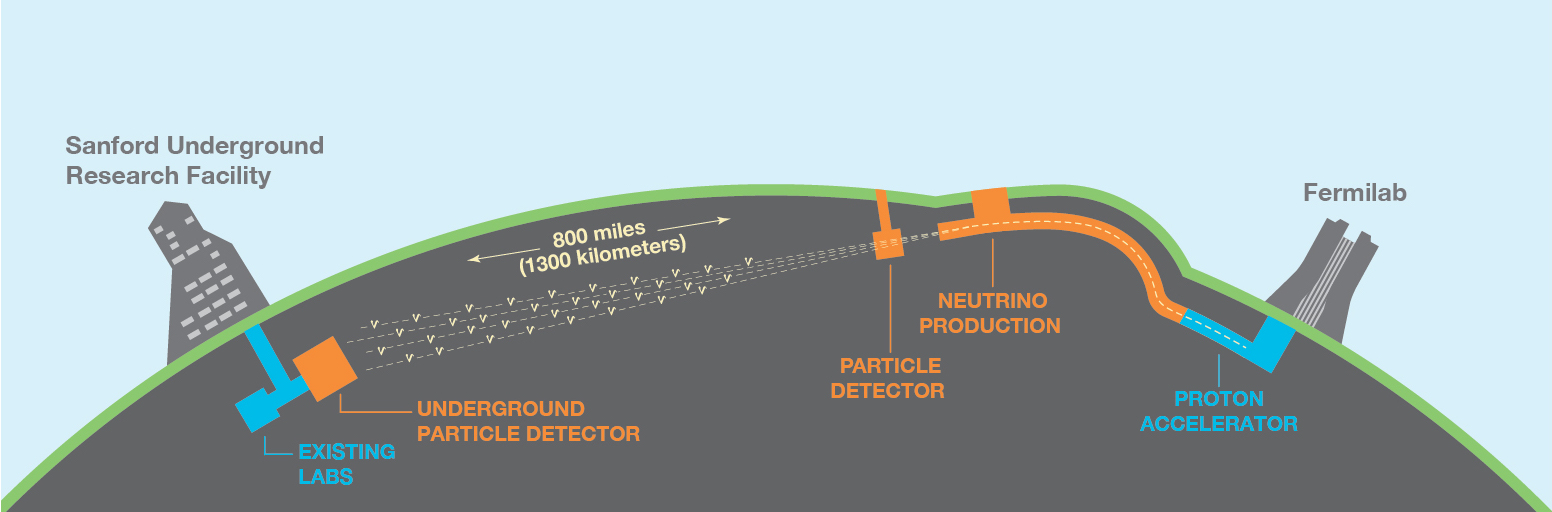
Fermilab’s Main Injector produces the world’s highest-intensity neutrino beam. Scientists plan to send the beam to the proposed Sanford laboratory. Project X would dramatically increase the intensity of the neutrino beam and provide proton beams for other experiments, too.
Over 350 people from over 60 institutions participate in the Long-Baseline Neutrino Experiment (LBNE), working together to plan and develop both the experimental facilities and the physics program. LBNE is expected to be fully constructed and ready for operations in 2022. New collaborators are welcome.
LBNE plans a world-class program in neutrino physics that will measure fundamental physical parameters to high precision and explore physics beyond the Standard Model. The measurements LBNE makes will greatly increase our understanding of neutrinos and their role in the universe, thereby better elucidating the nature of matter and anti-matter.
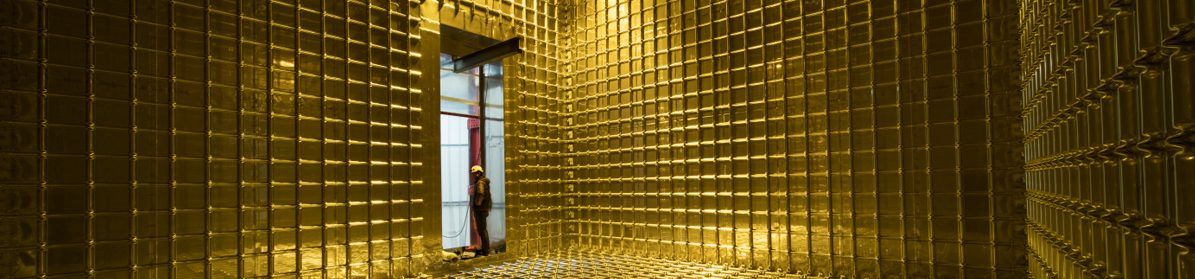
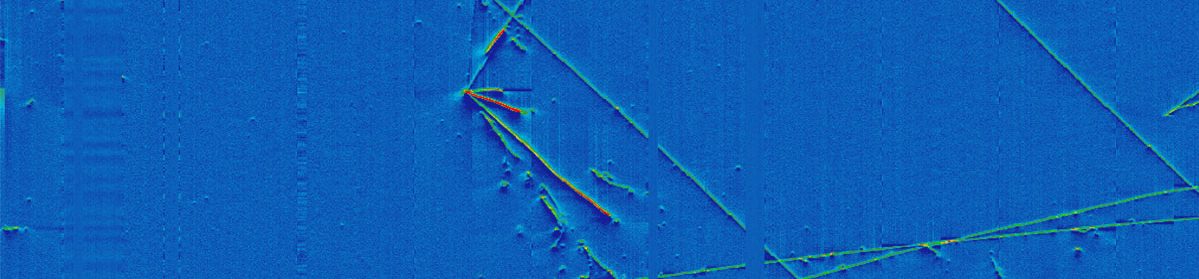
How will LBNE work? LBNE will send the world's highest-intensity neutrino beam 800 miles through the Earth's mantle to a large detector, a multi-kiloton volume of target material instrumented such that it can record interactions between neutrinos and the target material. Neutrinos are harmless and can pass right through matter, only very rarely colliding with other matter particles. Therefore, no tunnel is needed; the vast majority of the neutrinos will pass through the mantle's material, and in turn, right through the detector. The experiment will thus need to collect data for a decade or two since neutrinos interact so rarely.
Fermilab, in Batavia, IL, is the host laboratory and the site of LBNE's future beamline, and the Sanford Underground Research Facility (SURF), in Lead, SD, is the site selected to house the massive far detector. The term "baseline" refers to the distance between the neutrino source and the detector.
Why neutrinos?Neutrinos, astonishingly abundant yet not well understood, may provide the key to answering some of the most fundamental questions about the nature of our universe. The discovery that neutrinos are not massless, as previously thought, has opened a first crack in the highly successful Standard Model of Particle Physics. Neutrinos may play a key role in solving the mystery of how the universe came to consist only of matter rather than antimatter.
Collaboration Meeting 11-13 Sept 2013, Ft. Collins, CO
Sanford Lab officials outline LBNE plans
Black Hills Pioneer, June 3, 2013
Scientists plan to build what they consider to be one of the most important physics experiments in the world ... on the surface, in Kirk Canyon, or underground at the Sanford Lab...
Read more
Sanford Lab: the long view
Deep Thoughts, May 28, 2013
Just as the Sanford Lab itself is evolving,
so too is the project's long-term future.
Today's graphic by Multimedia Specialist
Matt Kapust updates the latest long view. Full graphic
Read more
Fermilab revs up search for the elusive neutrino
Medill Reports, May 23, 2013
(Fermilab) will host an informational meeting tonight to discuss its proposed (LBNE) Experiment... Fermilab is required to submit an environmental assessment as part of their approval process.
Read more
Digging in the dirt for LBNE
Fermilab Today, May 14, 2013
Last week, contractor Raimonde began drilling through rock and soil near Main Injector Road and Pond F as part of the geotechnical exploration program for LBNE.
Read more